
Movement Spotlight: Hip Hinging
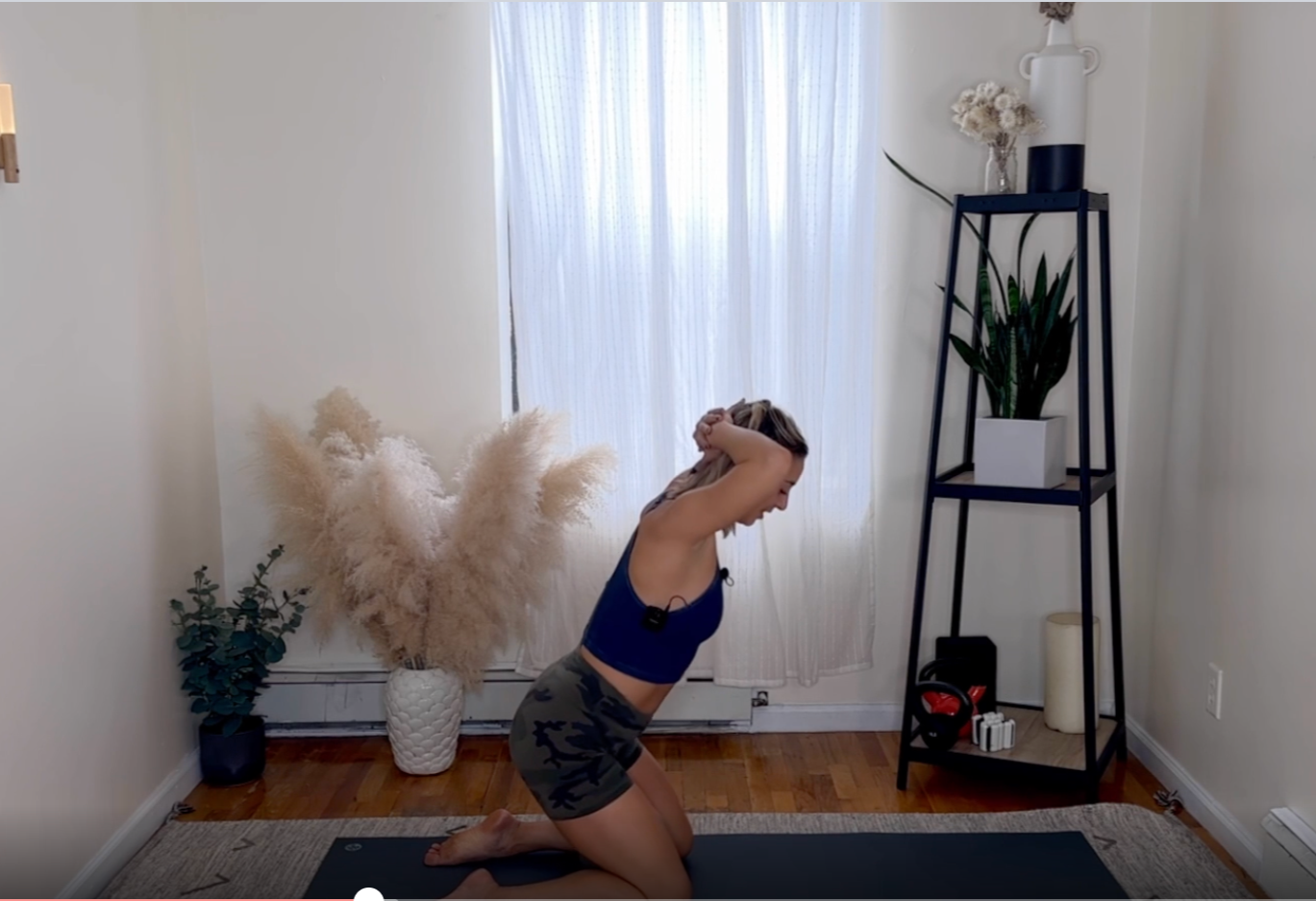
Movement Spotlight: Why We Hinge
If you've taken one of my classes, you've probably noticed we spend a lot of time practicing the mechanics of a hip hinge. You'll see it in bridges, kneeling squats, standing squats, and plenty of other exercises where I'm reminding you to "send your hips back," or “reach your tailbone back.”
But what exactly is a hinge, and why am I always emphasizing this range of motion?
A hip hinge is the action of folding from your hips while keeping a long spine. In the gym, you’d recognize hinging in movements like deadlifts or kettlebell swings. In everyday life, it's how you bend down to pick up a laundry basket, unload the dishwasher, or scoop up a baby without rounding your back.
The hinge teaches your body to use one of its strongest assets: your posterior chain. That's the group of muscles along the back of your body, including your glutes, hamstrings, and back muscles. These muscles help support your hips and spine, power you up hills and stairs, and make everyday lifting feel easier.
It also allows for some pliability in your pelvic floor. Hinging naturally opens and stretches pelvic floor muscles, so hinging is a good way to avoid constant pelvic floor gripping. As you slowly lower into a squat or bridge, your muscles are working while they're lengthening. This is called an eccentric contraction, and it's one of my favorite ways to build strength. Slowing that part of the movement increases time under tension, helps you build strength through a larger range of motion, and creates a loaded stretch through the back of the legs.
When people don't have enough movement through their hips, they often borrow it from their lower back instead. Instead of folding at the hips, the spine rounds or arches to make up the difference, but hinging helps avoid this strain.
As your hips become more mobile and your posterior chain gets stronger, everyday movements start to feel easier too. Whether you're picking up a heavy grocery bag, getting a suitcase into the overhead bin, gardening, or chasing after your baby, your body has a more efficient way to create and control movement.
The next time we practice a hinge in class, think less about how low you can go and more about where the movement is coming from.
Imagine you're closing a car door with your butt while keeping your chest long and try to resist the springs or gravity instead of letting them pull you?