
Back to Basics: Pelvic Stability
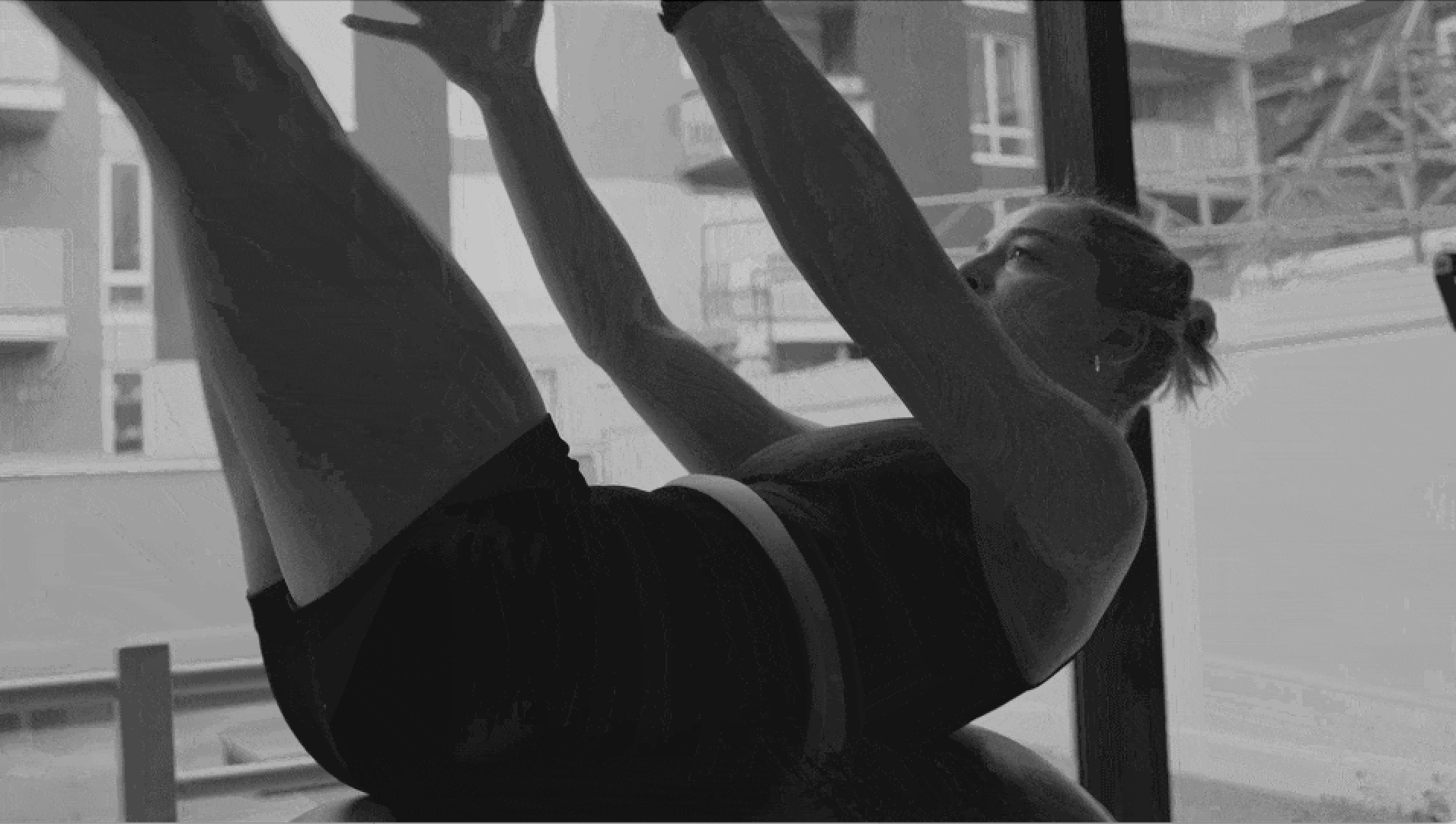
I’m starting a new series called Back-to-Basics, where I focus on the functional anatomy behind our basic Pilates moves so we can all remember WHY we’re doing each exercise and HOW to be more confident in the execution.
Next in this series: Pelvic Stability.
Why? Pelvic stability isn’t the sexiest phrase or movement, but it’s one of the most important concepts.
What Is Pelvic Stability?
Pelvic stability is how we use our deep core and glutes to support the pelvis as we move.
Your pelvis sits at the center of your body, connecting your upper and lower halves. If it’s not supported well, other areas like your lower back or your hips will start to compensate. When your lower back, hip flexors and joints start to feel tight, it likely means there’s an imbalance in your pelvis going on, and the core could get more involved to help with stability.
It’s important to note that stability doesn’t mean holding still. Instead, it means having enough control to either stay steady or move with intention.
Neutral vs Imprinted
In Pilates, we work with two main pelvic positions: neutral and imprinted.
Neutral pelvis is your natural alignment. There’s a small space between your lower back and the mat when reclined, and your pelvis is in a position where your spine can move freely.
Imprinted pelvis is when you gently tuck your pelvis so your lower back connects more fully to the mat. This helps engage the deep core and can provide more support in certain exercises.
It’s important to be able to access both positions and choose which one you’re prioritizing for which exercise.
Neutral allows for more natural movement and load through the body.
Imprint gives you a little extra support and helps you feel your core more, especially when laying down on your back.
The goal is to understand when to use each, and how to move between them with control so your hips and lower back are a whole lot happier!
What This Looks Like in Class
You’ll see pelvic stability in everything from bridging to core work to standing exercises.
Sometimes I’ll cue you to stay in neutral.
Sometimes I’ll ask you to imprint slightly.
Sometimes I’ll ask you to move between the two.
Next time you’re in class, start paying attention to where your pelvis is, how supported your hips and lower back feel, and whether the work is actually in your core.
Small adjustments make a big difference!
Try Pelvic Stability in one of my Lower Back Love Collection classes