
Back to Basics: Spinal Mobility
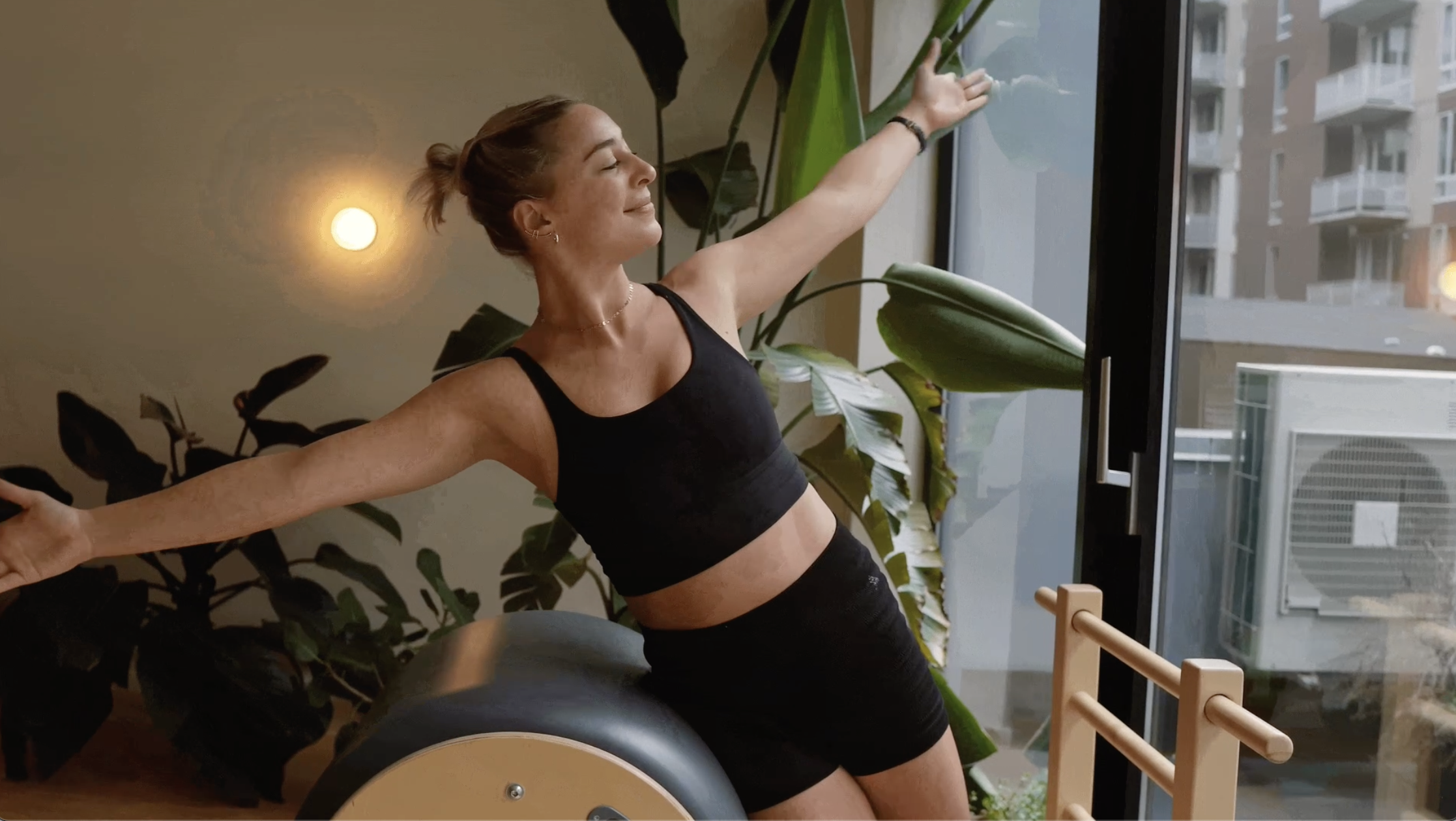
I’m starting a new series called Back-to-Basics, where I focus on the functional anatomy behind our basic Pilates moves so we can all remember WHY we’re doing each exercise and HOW be more confident in the execution.
Next in this series: Spinal Mobility. Why? Your spine isn’t supposed to be fixed, it’s supposed to move. And in many directions! Most of us spend our days with our spine relatively fixed, whether that’s sitting, standing, driving, or scrolling.
Anatomy Refresher
Your spine is made up of 24 vertebrae:
Cervical spine (neck) – built for mobility, especially rotation
Thoracic spine (mid-back) – designed for rotation and extension, but often stiff from sitting
Lumbar spine (low back) – built more for stability than large ranges of motion
Sacrum – the base, connecting spine to pelvis
Between each vertebra is a disc that acts as a shock absorber. Surrounding the spine are muscles that both stabilize and mobilize the spine. Spinal mobility is so important, because if certain joints within the spine don’t move well, others will compensate, and that’s when you run into trouble….
Most often the movement compensations happen in your lower back and neck if your mid-back or hips are stiff, and that can lead to injury.
Why We Practice Spinal Mobility
In class, I’ll ask you to mobilize your spine one segment at a time with exercises like: Cat-Cow, Roll-Ups, Bridging. Try focusing on each vertebrae moving independently next time you do one of these exercises in class, and know you’re building mobility to help prevent injury.
Pilates is the best because it teaches us both mobility and stability. For example, your lumbar spine does not need huge ranges of motion, it needs more stabilization, and that is where deep core engagement and Pilates comes in.
A mobile spine will make you a more efficient and resilient mover, both inside and outside the studio. Let’s practice this month!
Try Spinal Articulation in one of my favorite 25 min Total Body Classes.