Back to Basics: Rotation
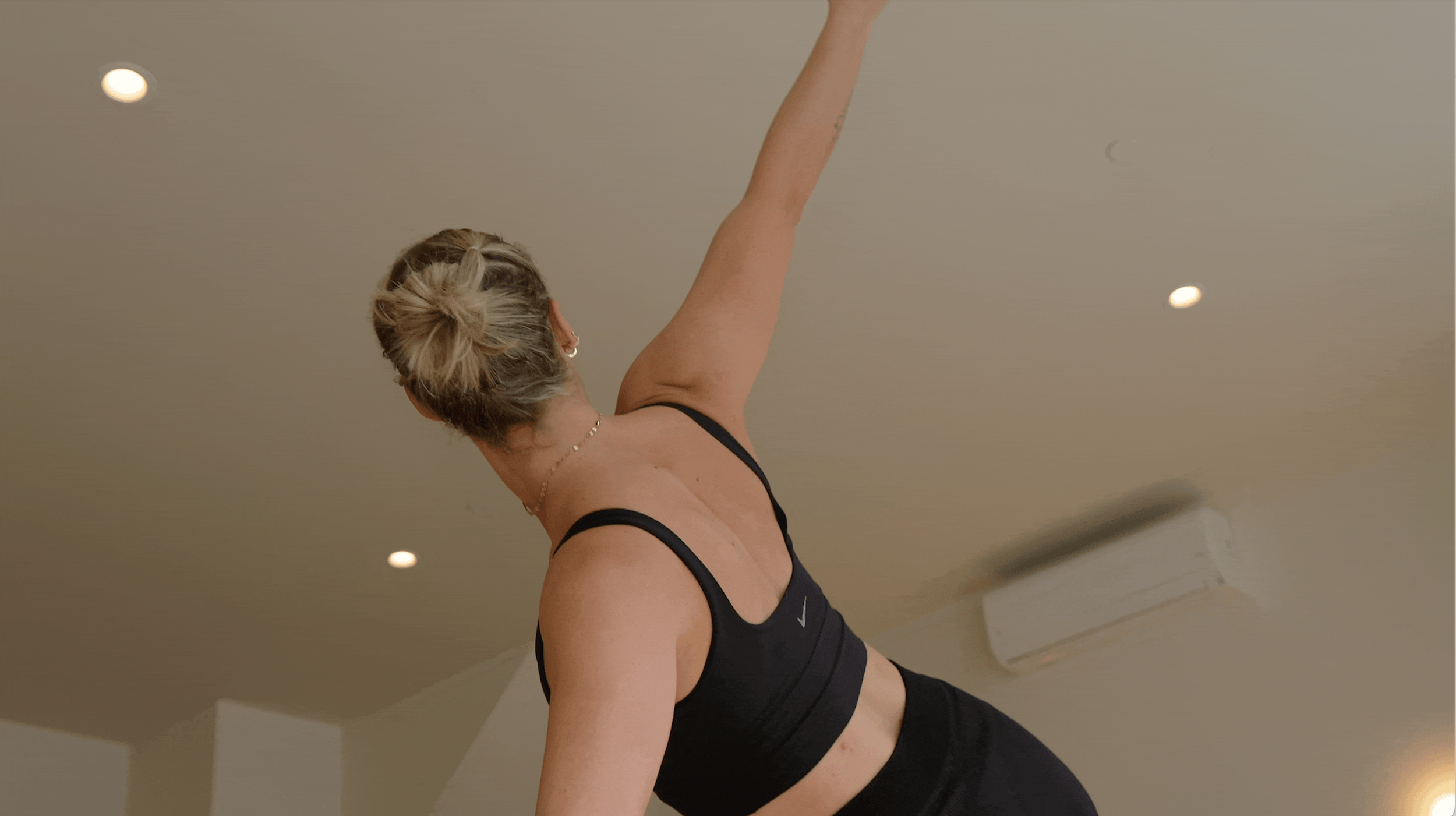
I’m starting a new series called Back-to-Basics, where I focus on the functional anatomy behind our basic Pilates moves so we can all remember WHY we’re doing each exercise and HOW to be more confident in the execution.
Next in this series: Rotation
A lot of people think of rotation as something we only do in workouts, but rotational strength and mobility show up constantly in daily life. When I was brainstorming themes that would be most helpful for summer, rotation was top of mind! Think about all the ways we rotate in daily life: reaching for items, walking, carrying bags, getting out of the car, picking up your baby, not to mention sports like golfing and tennis.
The spine is designed to rotate, but many of us lose access to rotation, especially in the mid-back, because we spend so much time sitting and moving mostly forward and backward. In Pilates, rotation helps us build:
core strength (especially obliques)
spinal mobility
balance and coordination
better movement efficiency overall
In Pilates we most often focus on rotating the trunk while keeping the pelvis stable. That combination is important because stabilizing the pelvis gives the mid-back a better opportunity to move. You’ll notice this in exercises like:
Spine Twist
Mermaid
Side-lying rotation work
Standing rotational movements
The goal isn’t to crank yourself into the biggest twist possible. It’s to create controlled movement through the spine while maintaining support through the core and pelvis. This month in class, start noticing where your rotation is coming from.
*A note on rotation after injury*
Rotation can also feel like one of the scarier ranges of motion when you’re coming back from an injury, especially low back, hip, or disc-related injuries. A lot of people become hesitant to rotate at all because they associate twisting with pain or instability. But avoiding rotation entirely usually isn’t the answer either. The goal is to reintroduce movement gradually and build confidence and control over time.
Start small:
smaller ranges of motion
slower movement
no added load initially
focusing on breath, control, and stability first, then build from there.
You want to expose the body to as much healthy movement variability as possible without overdoing it. Pilates is great for this because it allows us to strengthen and mobilize at the same time.
This is another reason why controlled rotational work can be so valuable. It helps your body relearn how to move efficiently and safely, instead of avoiding movement altogether.
Try in one of these rotation-focused classes!